Python Comes to Android
Table of Contents
- Introduction
- The Mobile Revolution and Python’s Challenge
- Understanding PEP 738: The Technical Deep Dive
- Technical Specifications
- Implications for Python Developers
- Packaging and Wheel Support
- Challenges and Limitations
- The Future of Python on Mobile
- Conclusion
Introduction
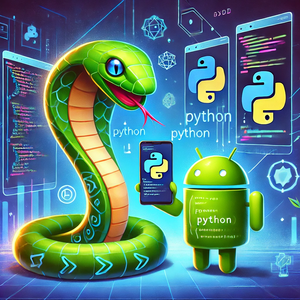
As a Python developer who’s been watching the mobile landscape evolve, I’m excited to break down one of the most significant developments in Python’s recent history: PEP 738, which officially adds Android as a supported platform in CPython.
The Mobile Revolution and Python’s Challenge
Let’s face it: mobile devices have transformed how we interact with technology. With Android running on approximately 70% of mobile devices worldwide, the absence of official Python support has been a glaring gap in the language’s ecosystem.
Existing projects like Chaquopy, BeeWare, and Kivy have long demonstrated Python’s potential on Android. But now, with PEP 738, we’re looking at a formal, standardized approach to Android integration.
Understanding PEP 738: The Technical Deep Dive
What is PEP 738?
PEP 738 is a standards track proposal that aims to add Android as a Tier 3 supported platform in Python 3.13. But what does that mean in practical terms?
Fundamentally, it’s about creating an “embeddable package” for Android – similar to the Windows embeddable package – that allows developers to integrate Python directly into Android applications.
Why Android Matters
Consider these eye-opening statistics:
- Android powers roughly 70% of mobile devices globally
- The platform is critical for reaching emerging markets and younger developers
- Mobile platforms are increasingly the primary computing environment for many users
Technical Specifications
Platform Compatibility
Android is essentially a POSIX platform built on a Linux kernel, which makes it relatively straightforward to adapt Python. However, there are crucial differences:
- Uses Bionic instead of glibc
- Unique filesystem layout
- Specific binary and compilation requirements
Supported Architectures
For Python 3.13, the PEP proposes support for:
arm64-v8a(64-bit ARM)x86_64
Notably, 32-bit architectures like armeabi-v7a are not initially supported, though future versions might include them.
Development Ecosystem
The Android development tools are remarkably versatile, supporting:
- Linux (x86_64)
- Windows (x86_64)
- macOS (x86_64 and ARM64)
Key tools include:
- NDK (Native Development Kit)
- Gradle
- Android Emulator
Implications for Python Developers
App Development
Unlike traditional desktop or web development, Android requires a unique approach:
- Python will be loaded as a dynamic library (
libpython3.x.so) - No standalone Python executable
- Integration through Java/Kotlin’s JNI (Java Native Interface)
Standard Library Considerations
Some standard library modules won’t be supported on Android:
cursesreadlinemultiprocessingtkinter
However, the PEP provides alternatives and workarounds, like redirecting stdout/stderr to Android’s Logcat.
Packaging and Wheel Support
A novel wheel tag format will be introduced: android_<api-level>_<abi>
Examples:
android_21_arm64_v8aandroid_21_x86_64
This approach ensures compatibility and clear versioning for Android-specific Python packages.
Challenges and Limitations
While exciting, the Android implementation isn’t without challenges:
- Limited subprocess support
- Specific module restrictions
- Emulator-specific testing requirements
The Future of Python on Mobile
PEP 738 isn’t just about Android – it’s a strategic move positioning Python as a truly cross-platform language. By officially supporting mobile platforms, Python becomes more attractive for:
- Educational environments
- Startup prototyping
- Cross-platform application development
Conclusion
PEP 738 represents a watershed moment for Python. It’s not just adding support for another platform; it’s acknowledging the fundamental shift in how software is developed and consumed.
For Python developers, this means exciting new horizons. For the Python ecosystem, it’s a bold step towards universal accessibility.
Key Takeaways:
- Android support is coming in Python 3.13
- Initial support covers 64-bit architectures
- Significant implications for mobile development
- Part of a broader strategy to make Python universally accessible
Call to Action: Keep an eye on the Python development process, start experimenting with mobile Python frameworks, and prepare for an exciting new era of cross-platform development!
Disclaimer: The implementation details are based on PEP 738, and actual implementation might have nuanced variations.







Comments